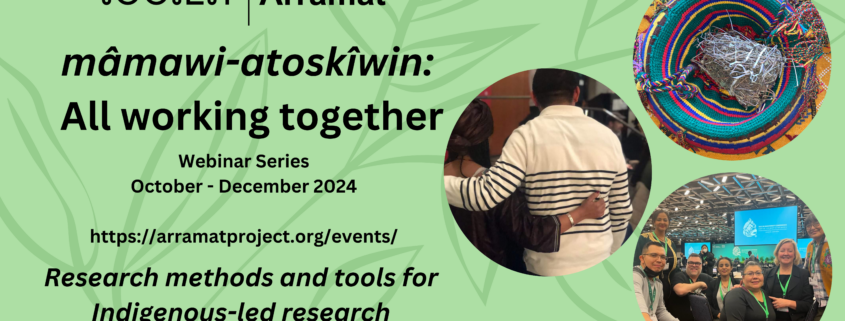
July 04, 2025, at 1:00 – 2:00 PM MDT: Hosting a webinar can be a powerful way to bring people together, share knowledge, and build community; but it takes more than just sending out a Zoom link. In this session, we’ll walk through the full process of organizing and hosting webinars that are thoughtful, inclusive, and smooth-running.
Please note: This will be based on Zoom meetings specifically. However, you can apply these tips to other platforms.
Join Ărramăt staff Abby D’ Souza and Carrie Oloriz to share tips on scheduling, inviting speakers, respecting FPIC, chairing a meeting and what to watch for during live events. We’ll also cover some key features and technical aspects of the Zoom platform, and best practices for interpretation and using AI tools for things like transcription and accessibility. Whether you’re brand new to webinars or just want to refine your approach, this session will offer useful tools, reminders, and templates to make your next event a success.
Abby D’Souza is the Communication Coordinator for the Ărramăt Project. A settler located in Treaty 6 Territory and the Traditional Homeland of the Métis, she has been engaged with the project since its proposal phase. Abby holds a Master’s degree in Resource Economics and Environmental Sociology, with a focus on Risk and Community Resilience. She has worked and learned from local communities in the Mekong River, where she conducted research on the impact of hydroelectric development livelihood diversifications. She is passionate about the Ărramăt Project and has thoroughly enjoyed working alongside the dedicated team.
Carrie Oloriz is honoured to be part of the research and project management team at Ărramăt. She has worked as an ecologist and Indigenous ally for almost 30 years, dedicating her career to bridging knowledge systems, participatory methods and collaboration. Carrie has managed major projects, designed and implemented numerous field programs and has extensive experience conducting interviews, facilitating meetings and supporting training and capacity development initiatives. Carrie’s academic research focused on the role of Indigenous knowledge and local management practices in decision-making about the sustainability of culturally significant fish and fishing livelihoods in the Lower Fraser River (Canada) and the Lower Mekong River (Thailand and Laos). She has the privilege of living and working in Coast Salish territory.